The Shifting Landscape of US-China Furniture Trade
For over two decades, the trade relationship between US furniture importers and Chinese manufacturers has been defined by complexity, shifting tariffs, and—most significantly—Antidumping (AD) and Countervailing Duties (CVD).
As of 2026, these duties remain a critical barrier for US brands. With some Chinese wood furniture categories facing duties exceeding 200%, the commercial viability of “Made in China” for high-volume wood furniture has evaporated. This has led to the “China Plus One” strategy, where Vietnam has emerged as the primary beneficiary.
At NAFOCO, we have helped dozens of US brands successfully transition their supply chains from China to our automated factories in Vietnam. In this guide, we break down what you need to know about antidumping duties and the advantages of the Vietnam shift.
What Are Antidumping Duties?
Antidumping duties are imposed by the US Department of Commerce when they determine that foreign manufacturers are selling goods in the US at “less than fair value,” thereby harming the domestic US industry.
For the wood furniture sector, this has historically targeted:
- Wooden Bedroom Furniture: One of the longest-standing AD orders.
- Wooden Cabinets and Vanities: Significant duties applied in recent years.
- Plywood and Veneered Panels: Broad coverage across many furniture components.
The “Vietnam Solution” to Tariff Mitigation
By moving production to Vietnam, US importers can legally and ethically avoid the punitive Section 301 tariffs and AD/CVD orders specific to Chinese-origin goods.
Why NAFOCO is the Ideal Partner for the “China Plus One” Move:
- True Origin Verification: We are a vertically integrated company. We own our FSC-certified forests, our sawmills, and our factories. This provides US Customs (CBP) with an airtight “Paper Trail” proving the wood is 100% Vietnamese and not transshipped Chinese material.
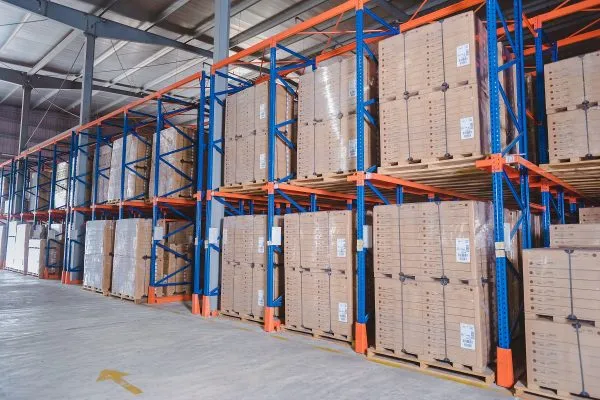
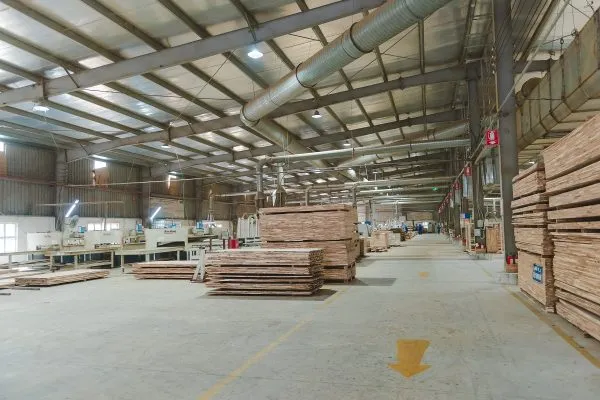
- Scale and Precision: Many brands worry that leaving China means losing scale. NAFOCO operates 3 factories with a capacity of 2,000+ containers per year. Our in-house robotics ensure that we match or exceed the precision levels found in top-tier Chinese factories.
- Tariff Mitigation: Vietnamese wood furniture currently enters the US under the General Rate of Duty (often 0% to 8%), providing an immediate 25% to 50% cost advantage over China-sourced equivalents.
Compliance and the Lacey Act
It isn’t just about tariffs; it’s about legality. The Lacey Act requires US importers to declare the species and country of harvest for all wood products.
Sourcing from NAFOCO eliminates this risk. Our FSC Chain of Custody (CoC) certification provides a third-party audit of our entire supply chain. When you import from us, you receive the documentation necessary to satisfy both US Customs and the Department of Agriculture.
The History of Antidumping on Chinese Wood Furniture
The US Department of Commerce has maintained antidumping orders on various Chinese wood furniture categories since the early 2000s. Here is a timeline of key events:
2003: Initial investigation begins for Wooden Bedroom Furniture from China. Duty rates range from 0.79% to 198.08%.
2005: Commerce Department issues a final determination, establishing the framework for the AD orders that continue today.
2018–2019: Section 301 tariffs are layered on top of existing AD/CVD orders, effectively doubling the duty burden for Chinese wood furniture exporters.
2020–2023: Administrative reviews adjust duty rates, but the overall trajectory is an increase in enforcement and expansion of product coverage.
2024–2026: Additional scrutiny on Chinese-origin wood furniture, with increased audits of importers suspected of transshipment.
The Commercial Impact
For a US importer, importing a container of Chinese-origin wood furniture in 2026 means:
- Base customs duty: ~3.5%
- Antidumping duty (varies): 0.79% to 235.96%
- Section 301 tariff: 7.5% to 25%
- Total potential duty burden: 11.79% to 264.46%
Compare this to Vietnamese-origin wood furniture, which typically enters with:
- Base customs duty: 0% to 8%
- Total duty burden: 0% to 8%
The Financial Impact: A Real Calculation
Let’s put this in concrete numbers:
Scenario: 40HQ Container of Dining Sets (FOB $20,000)
| Cost Component | China Sourcing | Vietnam Sourcing (NAFOCO) |
|---|---|---|
| FOB Value | $20,000 | $20,000 |
| Ocean Freight | ~$2,500 | ~$2,500 |
| Insurance | ~$300 | ~$300 |
| Base Duty (3.5%) | $700 | $0 (0% with GSP-like programs) |
| Antidumping (e.g., 216%) | $43,200 | $0 |
| Section 301 (25%) | $5,000 | $0 |
| Total Duty | $48,900 | $0 |
| Total Landed Cost | $71,700 | $22,800 |
The same container costs 3.1x more to import from China.
NAFOCO’s Tariff Mitigation Infrastructure
Moving production to Vietnam is not as simple as changing the “Country of Origin” on your purchase order. The US government actively audits for transshipment. Here is why NAFOCO is structurally prepared to be your tariff-free sourcing partner:
1. Physical Factory Base
We operate 3 factories in Ninh Binh Province, Vietnam. We have never operated factories in China. This is verifiable through our factory titles, utility bills, and employment records.
2. Vietnamese Supply Chain
Our raw material (Acacia wood) comes from our own FSC-certified forests in Vietnam. We do not import raw wood logs, meaning there is zero risk of commingling with Chinese materials.
3. Complete Documentation
Every shipment includes:
- FSC Chain of Custody Certificate
- Vietnamese Certificate of Origin (Form D or Form AK)
- Export Declaration with Customs stamps
- Photos of container loading at our factory yard
Section 232 and National Security Tariffs
An additional layer of complexity comes from Section 232 tariffs, which are based on national security grounds. While these have primarily targeted steel and aluminum, the administration has shown a willingness to use this tool broadly. Sourcing from Vietnam reduces your exposure to sudden policy shifts that are more likely to target China-origin goods.
EU Buyers: The Deforestation Regulation
For furniture importers serving the European Union, the new EU Deforestation Regulation (EUDR) creates an additional compliance requirement. It requires due diligence proving that imported wood is deforestation-free.
NAFOCO’s FSC-certified supply chain provides all the geolocation and compliance data needed to satisfy EUDR requirements. This is not yet a US regulation, but it signals the direction of global timber trade policy.
The Economics of Sourcing: Tariff Mitigation and the China Plus One Strategy
In 2026, sourcing is as much about trade policy as it is about product quality. The “China Plus One” strategy is no longer a luxury—it is a survival requirement for US importers.
Section 301 Tariffs and Antidumping Duties Chinese-origin wood furniture faces a primary tariff of 25% under Section 301, plus potential antidumping duties that can reach 200% for bedroom furniture and cabinets. Vietnamese-origin goods, conversely, benefit from the General Rate of Duty, which is often 0% for many furniture categories under specific trade programs.
The Financial Reality On a $20,000 container of outdoor furniture, the difference in duties alone can be $5,000 to $40,000. By partnering with NAFOCO, importers immediately recapture this margin, which can be used to improve retail competitiveness or invested in brand marketing.
ESG Compliance: More Than Just a Certificate
For modern retail boards, ESG (Environmental, Social, and Governance) reporting is a fiduciary duty. Sourcing from a vertically integrated manufacturer like NAFOCO simplifies this reporting significantly.
Traceability (The Lacey Act and EUDR) The US Lacey Act and the EU Deforestation Regulation (EUDR) require importers to prove the legal origin of their wood. NAFOCO’s 1,200 hectares of FSC-certified forest provide a clear, third-party audited chain of custody. We provide geolocation data for our harvests, allowing our clients to prove to regulators that their products are not linked to deforestation.
Social Responsibility Our BSCI and SEDEX audits provide transparency into our labor practices. We provide fair wages, health insurance, and safe working conditions for 1,800 employees in Ninh Binh. For your brand, this means zero risk of “social scandals” that can devastate a retail reputation overnight.
The Science of Timber Durability: Janka and Density Analysis
To appreciate why certain woods dominate the export market, we must look at the technical specifications that define their performance. The Janka Hardness test is the industry standard, measuring the force required to embed an 11.28mm steel ball into the wood.
| Wood Species | Janka Hardness (lbf) | Density (kg/m3) |
|---|---|---|
| Acacia (Vietnamese) | 1,100 - 1,750 | 650 - 850 |
| White Oak | 1,360 | 750 |
| Teak (Plantation) | 1,000 - 1,150 | 600 - 700 |
| Black Walnut | 1,010 | 640 |
For B2B buyers, these numbers translate directly to product longevity. A higher Janka rating means the furniture resists denting and surface wear from heavy daily use. In the hospitality sector (hotels and restaurants), where furniture is subjected to high turnover, the 1,500+ lbf rating of premium Vietnamese Acacia makes it a superior choice to traditional domestic hardwoods.
Kiln Drying: The Invisible Quality Factor
The greatest risk in international furniture shipping is “checking” (small surface cracks) caused by moisture imbalance. When furniture moves from the humid environment of Vietnam to the dry indoor air of the US Midwest or the arid climate of Arizona, the wood fibers shrink.
NAFOCO uses advanced vacuum kiln drying technology to achieve a consistent 8-12% moisture content (MC). This process takes 21-28 days and is monitored by AI-driven sensors. By achieving this precise MC range, we ensure the wood is “stressed-relieved,” meaning it will maintain its dimensions even after thousands of miles of ocean transit.
The Strategic Value of Long-Term Supply Chain Partnerships
In the global furniture industry of 2026, a “transactional” sourcing model—where buyers jump from factory to factory in search of the lowest price—is a recipe for failure. The most successful US and European retailers are those who build deep, strategic partnerships with their manufacturers.
Why Partnership Beats Price-Shopping:
- Priority Capacity Allocation: During the peak Q4 and Q1 shipping seasons, production space in Vietnam is at a premium. Partners who have consistent, year-round volume with NAFOCO receive priority allocation, ensuring their shelves are never empty during the critical Spring selling season.
- Collaborative Product Development: When we work with a buyer over several seasons, our engineering team gains a deep understanding of their brand’s aesthetic and functional requirements. This speeds up the sampling process and reduces the time-to-market for new collections.
- Joint Risk Mitigation: When raw material prices fluctuate or shipping disruptions occur, we work with our strategic partners to share the burden and find solutions. This stability is invaluable for retail financial planning.
- Shared ESG Goals: Carbon reduction and social compliance are long-term journeys. By working together over multiple years, we can align our sustainability investments with your brand’s specific ESG targets.
Technical Performance and Weatherability Testing
Our quality control lab performs rigorous testing to simulate years of outdoor exposure in just weeks.
- Salt Spray Testing: Essential for furniture destined for coastal regions like Florida, California, or the Mediterranean. We ensure that our stainless steel hardware and protective finishes can withstand corrosive salt air without failure.
- Static Load Testing: We test all chair and sofa designs to 300+ lbs of static load to ensure structural safety and compliance with US and EU furniture standards (BIFMA/EN).
- Adhesion Testing: We perform “cross-hatch” adhesion tests on our lacquered finishes to ensure they won’t peel or flake even under extreme temperature fluctuations.
- Cycle Testing: For folding furniture and adjustable loungers, we perform thousands of opening/closing cycles to ensure the mechanisms remain smooth and reliable for the end consumer.
The Role of Design in Outdoor Living Trends
Outdoor furniture is no longer just “utilitarian.” It has become a fashion-forward category driven by interior design trends. At NAFOCO, we stay ahead of these trends by collaborating with international designers:
- The “Organic Modern” Trend: Combining the raw, golden tones of Acacia with sleek, minimalist frames.
- The “Curated Patio” Trend: Moving away from matching 5-piece sets toward “mix-and-match” aesthetics that feel like a curated indoor room.
- The “Compact Living” Trend: Designing high-quality solid wood furniture for smaller urban balconies and compact patios, where space optimization is the key selling point.
Final Thoughts on Your 2027 Procurement Strategy
As you plan your procurement for the upcoming season, remember that the most successful products are those that solve a problem for the consumer. Whether that problem is a need for sustainable materials, a desire for luxury aesthetics at an affordable price, or a requirement for durable furniture that survives the winter, Acacia wood from NAFOCO is the answer.
We invite you to join our growing network of global partners and experience the “NAFOCO Difference” in wood manufacturing excellence.
Conclusion: Securing Your Supply Chain for 2027
The era of relying solely on Chinese manufacturing for wood furniture is over. The risks of sudden tariff spikes and the burden of antidumping duties are simply too high for modern retail margins.
By partnering with an established, IKEA-standard manufacturer like NAFOCO, you secure your supply chain, improve your sustainability profile, and significantly reduce your duty exposure.
Ready to Move Your Production to Vietnam? Contact our export team to discuss how we can transition your existing designs to our Vietnamese production lines.
Ready to De-Risk Your Supply Chain?
NAFOCO has been a trusted manufacturing partner for global furniture brands since 1991. Let us show you how easy the transition can be.